
Celebrating Career and Technical Education Month: Preparing Students for What Comes Next

Posted by: Brian Hernandez
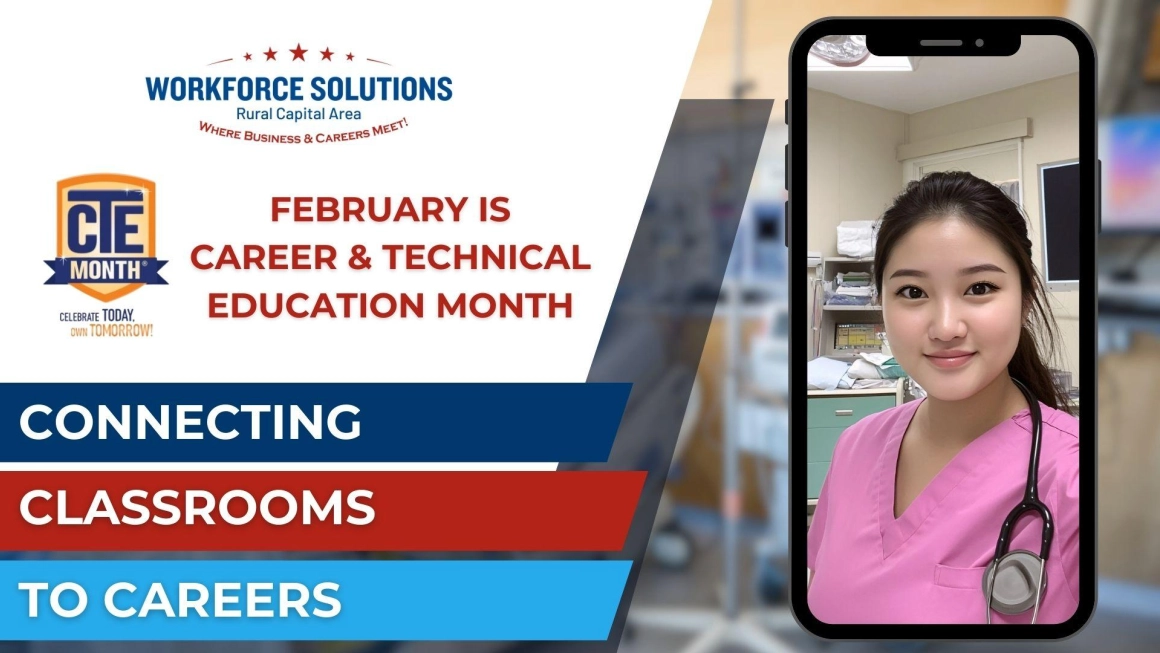
February is Career and Technical Education (CTE) Month, a time to recognize the powerful role CTE programs play in preparing students for high-skill, in-demand careers that strengthen both individual futures and our regional workforce.
Across our nine-county region, CTE opens doors. It gives students hands-on learning, industry-relevant skills, and a clear connection between the classroom and real-world careers. From healthcare and manufacturing to construction, information technology, and skilled trades, CTE programs help students see what is possible and how to get there.
At Workforce Solutions Rural Capital Area, we believe Career and Technical Education is not just an educational pathway. It is a workforce strategy.
The Value of Early Career Exploration
K-12 career exploration plays a critical role in student success. When students are exposed to career options early, they are better able to connect classroom learning to future goals. Career exploration helps students make informed choices about coursework, certifications, and training pathways that align with their interests and strengths.
Our team provides students and educators with up-to-date labor market insights that show which careers are in demand, which skills employers are seeking, and how local industries are evolving. These insights help CTE programs stay aligned with real workforce needs and help students understand where opportunity exists in their own communities.
Partnering With Schools and Employers
Our K-12 team works directly with school districts and Career and Technical Education programs across all nine counties we serve. They collaborate with educators, counselors, and administrators to support career exploration and connect classroom learning to real workforce opportunities. By combining labor market insights with on-the-ground knowledge of local schools, the team helps students understand what careers are available in their communities and what skills those careers require.
Our Business Services team partners directly with local employers to better understand current and future workforce needs across key industries. Those employer insights, paired with regional labor market data, inform the career information shared with schools and students. This ensures CTE programs reflect real demand and help students see clear pathways from education to employment.
Together, this approach bridges education and industry, creating more relevant CTE experiences that prepare students for in-demand careers while supporting the workforce needs of local businesses.
Experience That Makes a Difference
What makes our K-12 team unique is lived experience. Many of our team members are former educators who bring firsthand knowledge of the challenges and opportunities schools face every day.
They understand the pressures on teachers. They know the realities of limited resources, evolving standards, and the growing need to prepare students for a changing workforce. That perspective allows our team to meet schools where they are and provide support that is practical, relevant, and respectful of the work already happening in classrooms.
Because they have been there, our team can help bridge the gap between education and employment in ways that truly work for students, educators, and employers.
Building Pathways to High-Demand Careers
CTE programs help students graduate with skills, confidence, and direction. They also help employers build a pipeline of talent that meets real workforce needs. When schools, workforce partners, and employers work together, everyone benefits.
This Career and Technical Education Month, we celebrate the educators who lead these programs, the students who commit to learning valuable skills, and the schools that invest in career readiness. We are proud to stand alongside our education and employer partners as they prepare the next generation of workers, innovators, and leaders.
At Workforce Solutions Rural Capital Area, supporting CTE is about more than programs. It's about opportunity, connection, and building a local workforce that is ready for what comes next.