
Opportunity Starts Earlier Than You Think

Posted by: Brian Hernandez
When people talk about workforce development, they usually picture adults.
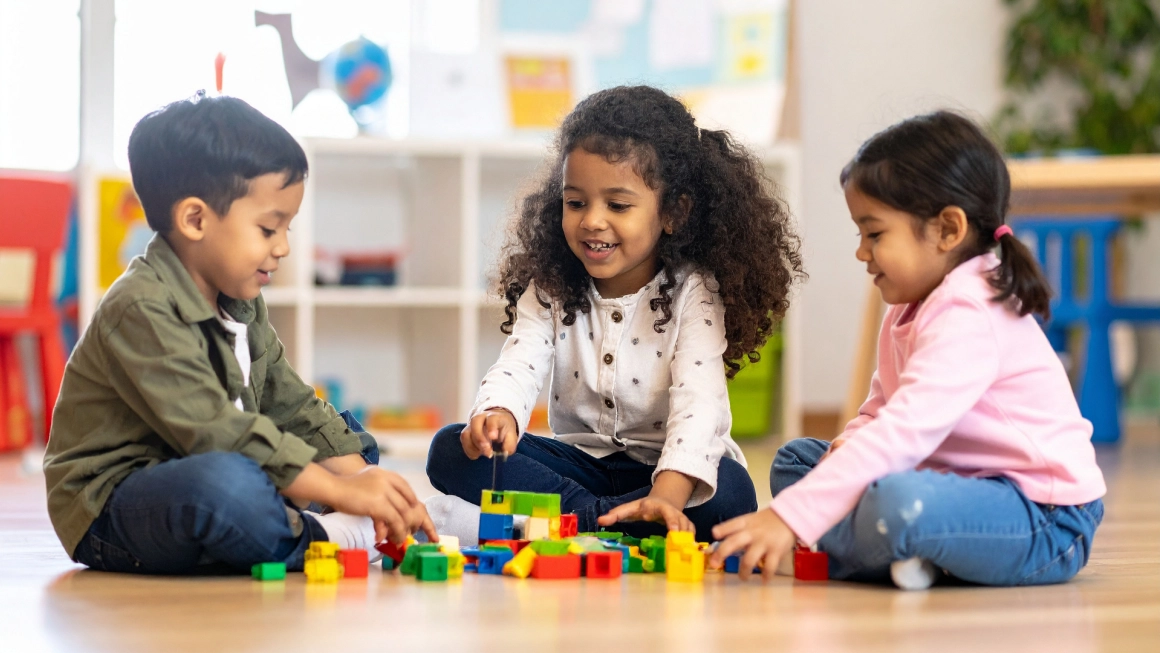
They think about job training programs, apprenticeships, career pathways, certifications, and employment opportunities. What they don't often picture is a room full of preschoolers building with blocks, reading stories, or learning how to work together.
Yet some of the most important workforce skills begin developing long before someone enters a classroom, writes a resume, or applies for a job.
The ability to communicate, solve problems, collaborate with others, and adapt to new situations doesn't suddenly appear in adulthood. These skills develop over time, often beginning in a child's earliest years.
That's one reason quality early learning matters so much.
The Short Version
Don't have time to read the whole article? Here's what you need to know:
- Early learning helps children build skills they'll use throughout their lives.
- Quality child care supports both children's development and working families.
- Early childhood education focuses on social, emotional, and cognitive growth.
- Strong early learning experiences help prepare children for future success.
- Investing in young children benefits families, employers, and entire communities.
Learning Starts Earlier Than Most People Realize
It's easy to think of education as something that begins when a child enters kindergarten. In reality, learning starts much earlier.
From the moment children are born, they're learning how to communicate, build relationships, explore their environment, and make sense of the world around them. Every interaction, conversation, and experience helps shape how they think and learn.
By the time children walk into their first elementary classroom, they've already spent years developing foundational skills that will influence their future success. That's why the earliest years of childhood are often considered some of the most important years of development.
The experiences children have during this time help build the foundation for everything that comes next.
Child Care Is About More Than Supervision
For many families, child care begins as a practical necessity.
Parents need a safe, reliable place where their children can learn and grow while they work, attend school, or pursue training opportunities. Quality child care certainly provides that support, but its impact extends far beyond supervision.
Walk into a high-quality early learning center and you'll find children asking questions, exploring new ideas, working together, and learning through play. What may look like simple activities are often carefully designed experiences that help children develop communication skills, emotional awareness, independence, and confidence.
These environments encourage curiosity while helping children learn how to navigate challenges, express themselves, and build relationships with others.
The Skills Children Develop Today Matter Tomorrow
Many of the skills employers value most aren't technical skills.
Communication. Teamwork. Problem-solving. Adaptability. Critical thinking.
These abilities don't appear overnight. They develop gradually through experiences that begin in childhood.
When children learn to share materials during an activity, they're developing cooperation. When they work through a disagreement with a classmate, they're practicing conflict resolution. When they experiment, create, and explore, they're learning how to think critically and solve problems.
The activities may seem simple, but the lessons often last a lifetime.
That's why early learning isn't only about preparing children for the next grade level. It's about helping them develop skills that will support future learning, future careers, and future opportunities.
Why Early Learning Matters to the Entire Community
The benefits of quality early learning extend well beyond individual children.
When families have access to reliable child care, parents are better able to participate in the workforce, pursue education, and advance their careers. Employers benefit from a more stable workforce. Communities benefit from stronger economic participation and family stability.
At the same time, today's children will eventually become tomorrow's nurses, teachers, electricians, entrepreneurs, healthcare professionals, and business leaders.
In many ways, child care and workforce development are connected. One supports today's workforce. The other helps prepare tomorrow's.
Visit an Early Learning Center and You Might Be Surprised
If you've never visited a quality early learning center, you may be surprised by what you find.
You'll see children learning through exploration, building friendships, asking questions, and developing confidence. You'll see educators creating environments where children feel safe, supported, and encouraged to learn.
What often appears to be play on the surface is helping children develop skills they'll carry with them for years to come.
The goal isn't simply to prepare children for kindergarten. It's to help them build a lifelong love of learning and a strong foundation for future success.
Final Takeaway
When people think about the future workforce, they often picture high school students, college graduates, or adults learning new skills.
But the journey starts much sooner.
Every day, children in quality early learning environments are developing communication skills, confidence, curiosity, resilience, and problem-solving abilities. Those experiences help shape how they learn, grow, and navigate the opportunities ahead.
Opportunity doesn't begin when someone applies for a job.
For many people, it begins much earlier.
The future workforce is already learning, exploring, and growing today. We just tend to call them children.