
Still Serving: How Veterans Continue Helping Veterans Across Texas
Posted by: Brian Hernandez
For many Americans, military service is measured by deployments, years in uniform, medals earned, and missions completed.
What often gets less attention is what happens after the military career ends.
The transition from military service to civilian life can be one of the most significant adjustments a veteran will ever face. Finding a new career, building a new routine, navigating benefits, reconnecting with family, and discovering a renewed sense of purpose can all happen at the same time. While every veteran's experience is different, one thing remains true: the transition doesn't end when the uniform comes off.
As the son of a military veteran, I saw some of those challenges firsthand.
My father served proudly, but like many veterans of his generation, his journey home wasn't always easy. The effects of military service didn't simply disappear when he left the military. Post-Traumatic Stress Disorder (PTSD) became part of that story, but there were other challenges too. One of the most difficult was losing the camaraderie, structure, and sense of belonging that military life provides.
That's something many civilians don't fully understand.
Veterans aren't just leaving a job when they separate from service. They're leaving a culture, a community, and a support system built through shared experiences and sacrifice.
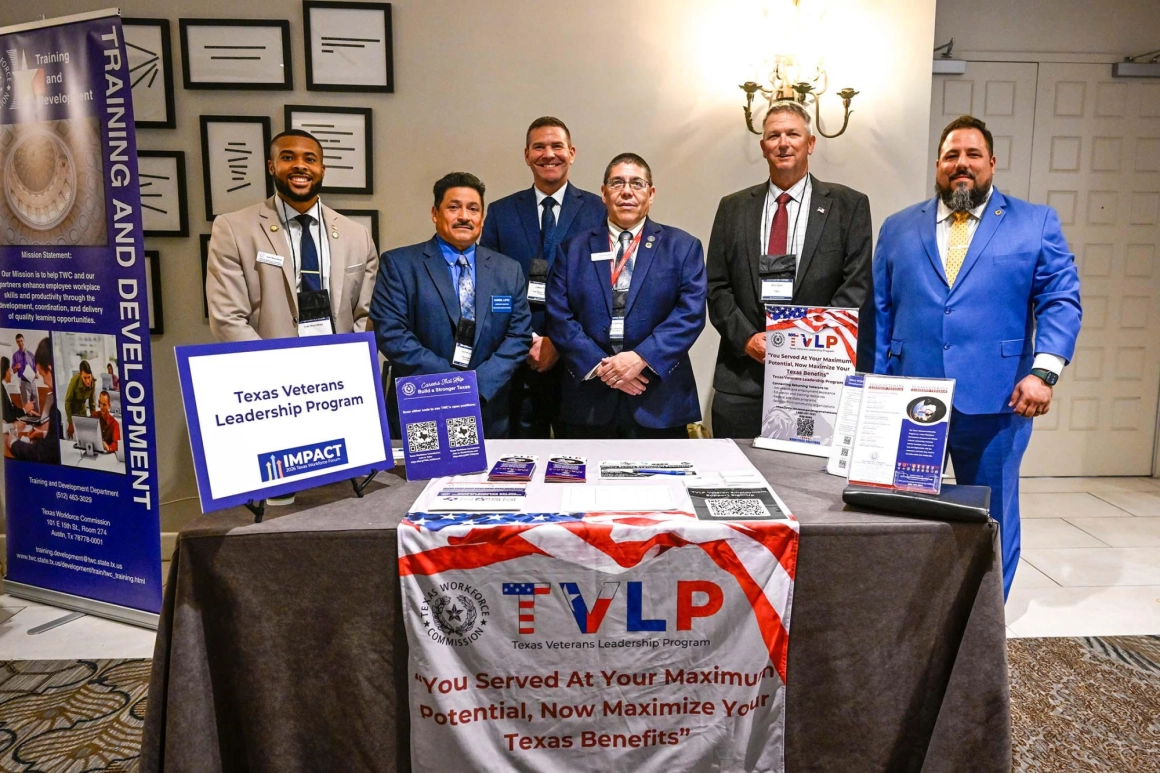
That's one reason programs like the Texas Veterans Leadership Program (TVLP) matter so much.
The Short Version
Don't have time to read the whole article? Here's what you need to know:
- Transitioning from military service involves more than finding employment.
- Veterans often benefit from peer support and connections with people who understand their experiences.
- The Texas Veterans Leadership Program connects veterans, military spouses, and transitioning service members with resources across Texas.
- Every Veterans Resource and Referral Specialist on the TVLP team is a veteran.
- The program is led by veterans and built on the belief that veterans helping veterans can make a lasting difference.
The Challenges of Coming Home
Military service creates bonds that are difficult to explain to people who haven't experienced it.
Service members train together, deploy together, solve problems together, and rely on one another in ways that few professions require. The military becomes more than a workplace. For many, it becomes part of their identity.
When service ends, veterans often face a series of questions that don't have easy answers.
- How do I translate military experience into a civilian career?
- Where do I turn for support?
- How do I rebuild my professional network?
- Who understands what I've been through?
Employment is often part of the challenge, but it's rarely the only challenge. Veterans may also be navigating healthcare, housing, education, family responsibilities, financial concerns, or simply trying to find a new sense of purpose.
Sometimes what veterans need most isn't a program or a brochure.
Sometimes they need another veteran.
A Program Built by Veterans, for Veterans
That's the idea behind the Texas Veterans Leadership Program, better known as TVLP.
Operated by our partners at the Texas Workforce Commission, the program serves as a statewide resource and referral network that helps veterans, transitioning service members, military spouses, and their families connect with the tools and services they need to thrive.
What makes the program unique is that every Veterans Resource and Referral Specialist on the team is a veteran.
These aren't people who learned about military life in a textbook.
They've lived it.
They understand deployments, family separations, military culture, career transitions, and the challenges veterans can face because they've experienced many of those same realities themselves.
That shared experience creates trust. It creates understanding. And often, it creates hope.
Leading a Statewide Mission of Service
At the helm of the Texas Veterans Leadership Program is a mentor of mine, Bob Gear, a retired U.S. Army veteran whose commitment to serving veterans has continued long after his military career ended.
Before joining TVLP in 2008, Bob served more than 20 years in the United States Army as a tanker, including service during Desert Shield and Desert Storm and two deployments supporting Operation Iraqi Freedom.
His leadership extends far beyond his military service.
Bob helped establish the nation's first Veterans of Foreign Wars Virtual Post and has served in numerous leadership roles within the Veterans of Foreign Wars and the American Legion. Along the way, he earned multiple state and national recognitions for his dedication to veterans and military families, including the Texas VFW J.T. Rutherford Award and Texas American Legion Legionnaire of the Year Award.
Today, Bob is the Director of TVLP, and leads a statewide team of Veterans Resource and Referral Specialists who work in workforce areas across Texas. Through TVLP and Texas Operation Welcome Home, he continues a mission that has guided much of his life: helping veterans find the support, resources, and opportunities they need to build successful lives after military service.
Under his leadership, the program has remained focused on a simple but powerful belief: No veteran should have to navigate the transition alone.
Serving Veterans in Rural Capital Area and Beyond
In Workforce Solutions Rural Capital Area's nine-county region, that mission is carried forward by my good friend, Casey Wade, Regional Manager for West Texas with TVLP.
While Casey's territory extends well beyond Rural Capital Area, veterans throughout our region have benefited from his work for more than a decade.
Casey retired from military service as a Master Sergeant with the Texas Army National Guard after nearly 20 years of service. Throughout his career, he served in operations, training, recruiting, personnel management, and family readiness roles. He also worked extensively with military families, helping them navigate the challenges that often accompany deployments and military life.
Since joining TVLP in 2014, Casey has helped hundreds of veterans and family members connect with employment opportunities, support services, veteran organizations, community resources, and workforce partners. He has built relationships with employers, service providers, and veteran organizations across multiple workforce regions while remaining deeply involved in local veteran initiatives.
His work with the Williamson County Veterans Treatment Court, community coalitions, veteran service organizations, and countless community partners reflects the same principle that guides the entire TVLP team: veterans are often best positioned to help fellow veterans succeed.
Continuing the Mission
One of the things I've come to appreciate over the years is that service doesn't always end when military service ends.
For many veterans, it simply takes a different form.
Some become teachers. Some become first responders. Some become business owners, coaches, mentors, or community leaders. Others dedicate themselves to helping fellow veterans navigate the same challenges they once faced themselves.
That's what Bob Gear, Casey Wade, and the entire TVLP team do every day.
The uniforms may be different now, but the mission remains familiar.
They're helping veterans find resources. They're helping veterans find careers. They're helping veterans reconnect with their communities. Most importantly, they're helping veterans understand that they don't have to make the journey alone.
Final Takeaway
The transition from military service to civilian life is about more than employment.
It's about finding connection, purpose, support, and opportunity.
Across Texas, TVLP provides those connections through a statewide team of veterans who continue serving long after their military careers have ended. Led by Bob and supported by dedicated professionals like Casey, the program reflects one of the strongest traditions in military culture: taking care of your own.
Veterans helping veterans.
It's a simple idea. But for countless veterans and families across Texas, it can make all the difference.