
Think Manufacturing Is Just Assembly Lines? Think Again.

Posted by: Brian Hernandez
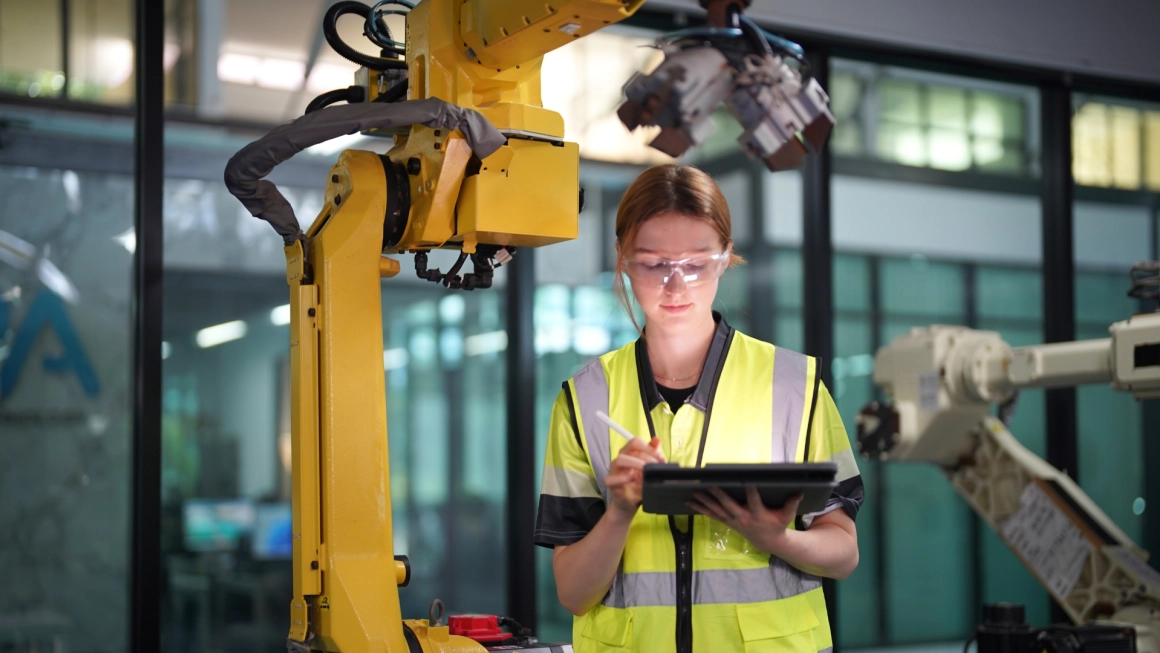
From robotics and precision machining to semiconductor technology, Central Texas manufacturing careers are changing. WSRCA research reveals the skills employers need, the jobs they're struggling to fill and the opportunities ahead.
When you picture someone working in manufacturing, what do you see?
Maybe it's someone standing beside an assembly line, performing the same task hundreds of times a day. Perhaps it's a noisy factory filled with heavy machinery.
Those jobs and environments still exist, but they tell only part of the story.
Walk into a modern manufacturing facility today, and you might find employees programming robots, analyzing production data, troubleshooting sophisticated equipment or using advanced technology to inspect products with incredible precision.
The manufacturing industry has changed. And so have the careers available within it.
Across Central Texas, manufacturing is helping shape our region's economic future. But as technology advances and companies expand, one question becomes increasingly important: Where will the skilled workers come from?
Research from Workforce Solutions Rural Capital Area (WSRCA) suggests the answer begins with recognizing that today's manufacturing careers look very different from what many people imagine.
33,000 Reasons to Rethink Manufacturing Careers
In July 2025, WSRCA released its Central Texas Semiconductor & Advanced Manufacturing Workforce Report, developed by TIP Strategies with guidance from the Austin Regional Manufacturers Association, Workforce Solutions Capital Area and Opportunity Austin.
The findings revealed an extraordinary opportunity.
Central Texas could add approximately 33,000 jobs across semiconductor and advanced manufacturing-related industries by 2030.
The projection covers a 12-county regional labor market that includes WSRCA's nine-county service area, along with Bell, Milam and Travis counties.
The study also projected approximately 4,700 new jobs annually across the sector through 2030, with significant growth expected in computer programming, systems design, engineering, software development and semiconductor manufacturing.
But perhaps the most important finding wasn't how many jobs could be created.
It was how difficult some of those positions could be to fill.
Researchers examined workforce demand from 110 regional employers, identifying occupations, technical skills and potential shortages that could affect the industry's growth.
The message was clear: Central Texas has tremendous manufacturing potential, but that growth depends on developing the people who can make it happen.
The Factory Floor Has Become a Technology Hub
Manufacturing has always required people who know how to make things. Increasingly, it also needs people who understand how things work.
Today's facilities can combine robotics, computer-controlled equipment, sensors, automated production systems and sophisticated testing technologies to manufacture everything from electronic components to specialized industrial equipment.
But here's something technology hasn't changed: Machines still need people.
Someone has to program the equipment, identify problems, maintain production systems, ensure quality and make decisions when something doesn't work as expected.
WSRCA's workforce report identified engineering and technician positions as the industry's two highest talent priorities.
Employers specifically emphasized the need for workers skilled in technical troubleshooting, equipment maintenance, manufacturing processes and safety procedures.
And while automation may change certain production tasks, it also creates opportunities for employees who can maintain, operate and improve increasingly complex systems.
The future of manufacturing isn't simply about replacing manual work with machines. It's about preparing people to work alongside technologies that continue to evolve.
Five Manufacturing Careers You Might Not Have Considered
WSRCA's research identified several occupations that regional employers need, including positions that don't necessarily require a four-year college degree.
1. Robotics and Automation Technician
Automated equipment plays an increasingly important role in modern production. Technicians help maintain, troubleshoot and support the systems that keep facilities operating.
Employers identified automation, preventive maintenance and testing equipment among their most requested technical skills.
2. Quality Control Technician
Before a product reaches a customer, someone needs to make sure it meets expectations.
Quality control professionals inspect materials, test products, identify defects and help maintain production standards.
WSRCA's report identified a regional median wage of approximately $21.19 per hour for inspectors, testers, sorters, samplers and weighers.
3. Industrial Maintenance Technician
When sophisticated equipment breaks down, production can come to a standstill.
Maintenance technicians use mechanical, electrical and troubleshooting skills to keep operations moving.
Equipment maintenance technicians were among the positions regional employers specifically identified as difficult to fill.
4. Computer Numerical Control (CNC) Machinist
CNC machinists use computer-controlled equipment to produce highly precise components.
Their work supports industries ranging from aerospace and automotive manufacturing to electronics and specialized industrial production.
WSRCA's research found that the regional concentration of machinists was only half the national average, highlighting a potential shortage of skilled workers.
5. Supply Chain and Logistics Specialist
Manufacturing doesn't begin or end on the factory floor.
Someone must coordinate materials, manage inventory, schedule deliveries and ensure finished products reach customers.
According to WSRCA's report, logisticians earned a regional median wage of approximately $36.73 per hour, demonstrating that manufacturing-related careers extend well beyond traditional production positions.
These examples represent just a portion of the opportunities available.
Manufacturing also depends on engineers, software developers, data analysts, project managers, supervisors and many other professionals.
Wage figures reflect the regional occupational data used in WSRCA's 2025 study and are not current job offers or guaranteed starting wages.
The Skills Shortage Is Already Here
One of the most revealing findings from WSRCA's research is that Central Texas doesn't simply need more workers.
It needs more workers with specific technical skills.
The report found that approximately one-third of the industry's identified in-demand occupations had regional talent concentrations at or below the national average.
Among the positions employers struggled to fill were CNC machinists, specialized welders, equipment maintenance technicians and assemblers.
The research also revealed another challenge.
More than half of the identified in-demand occupations had above-average shares of workers approaching retirement age.
That means employers must prepare not only for new positions created by expansion but also for the eventual departure of experienced employees.
And replacing that experience isn't always straightforward.
A skilled machinist or maintenance technician may have spent years developing knowledge that can't be replicated through a short training course.
For manufacturers, that creates an important opportunity to invest in apprenticeships, mentorship and training that transfers knowledge from experienced employees to the next generation.
You Might Already Have Skills Manufacturers Need
Here's something worth considering if you're exploring a career change.
You don't necessarily need manufacturing experience to have skills that manufacturers value.
Someone who has repaired vehicles may already understand mechanical systems and troubleshooting.
An employee with warehouse experience might understand inventory management, safety procedures and logistics.
A restaurant manager may bring valuable experience in scheduling, quality standards, team leadership and managing operations under pressure.
And someone comfortable with computers, mathematics or solving technical problems may have a foundation for learning automation or equipment programming.
These are transferable skills, and recognizing them can help employers expand their talent pipelines while giving job seekers new career possibilities.
WSRCA's research identified three broad areas of skills employers consistently seek:
- Technical troubleshooting and equipment maintenance, including automation, testing equipment and preventive maintenance.
- Manufacturing processes and safety, including continuous improvement, production processes and quality practices.
- Engineering and scientific knowledge, including electronics, mechanical engineering and semiconductor technologies.
Not every position requires expertise in all three areas.
But understanding how existing skills connect to these categories can help job seekers identify new opportunities and employers recognize talent they might otherwise overlook.
A Four-Year Degree Isn't the Only Way In
One of the biggest misconceptions about advanced manufacturing is that every technology-related position requires an engineering degree.
Some certainly do.
But WSRCA's research found that most technician occupations typically require less than a bachelor's degree, with entry pathways ranging from a high school diploma and short-term training to technical certificates and associate degrees.
And the financial opportunities can be significant.
The report found that three-quarters of the identified in-demand occupations offered median wages of at least $30 per hour.
That's approximately $62,400 annually for someone working 40 hours per week, 52 weeks per year.
For many Central Texans, manufacturing can offer a pathway to greater financial stability without requiring a traditional four-year degree.
The report also highlighted education and training partnerships already helping build the region's manufacturing workforce, including programs through Austin Community College, Texas State Technical College, local school districts and industry partners.
Among the examples were CNC technician apprenticeships, semiconductor technician training, industrial maintenance programs and career and technical education pathways.
These programs demonstrate how employers and educators can work together to create opportunities that reflect actual workforce needs.
Employers Can't Wait for the Perfect Candidate
As manufacturing becomes more technologically advanced, employers face an important decision.
Do they continue searching for candidates who already possess every required skill, or do they invest in developing promising employees?
WSRCA's research suggests that stronger employer partnerships and coordinated training efforts will be essential to meeting future demand.
The report recommends expanding apprenticeship and earn-and-learn opportunities, improving career awareness among K–12 students, establishing common technical skill expectations and using labor market data to guide training investments.
It also emphasizes the importance of helping smaller manufacturers access workforce resources that larger companies may already have in place.
For employers, that means looking beyond traditional recruitment strategies.
An experienced employee might be ready to advance into a technical role with additional training.
A recent high school graduate could begin an apprenticeship that leads to a skilled career.
And a worker from another industry may already possess many of the foundational abilities needed to succeed.
The goal isn't simply to fill today's vacancies. It's to build the workforce that tomorrow's production demands will require.
Manufacturing's Future Is Being Built Right Here
Across the nine-county Rural Capital Area, manufacturing plays an important role in supporting businesses, creating career opportunities and strengthening local communities.
From semiconductor production and electronics to industrial equipment and precision components, Central Texas manufacturers contribute to supply chains that extend far beyond our region.
But the industry's continued success depends on more than facilities, equipment and investment.
It depends on people.
WSRCA works alongside employers, educators and economic development partners to strengthen the connections between workforce needs and career opportunities.
Our research helps identify emerging demands, highlight talent shortages and guide conversations about how to prepare residents for the jobs ahead.
For employers, that means access to workforce expertise, recruitment assistance and opportunities to explore training partnerships.
For job seekers, it means discovering career pathways they may not have considered and identifying resources that can help them take the next step.
And for our region, it means ensuring that economic growth creates meaningful opportunities for the people who call Central Texas home.
The Next Manufacturing Breakthrough Might Be a Person
When we talk about the future of manufacturing, it's easy to focus on the newest robots, the fastest production systems or the next major facility announcement.
Those innovations matter.
But so does the technician who keeps a machine running, the quality specialist who catches a costly mistake, the apprentice learning a new trade and the experienced worker discovering that their skills can open an entirely new career.
Technology may change what manufacturing looks like.
People will determine what manufacturing becomes.
And with thousands of potential new jobs on the horizon, there's never been a better reason to explore what a manufacturing career could look like.
Whether you're an employer preparing for your next phase of growth or a job seeker wondering where your skills could take you, WSRCA is here to help connect talent with opportunity.
Explore the Research Behind the Opportunity
Want to better understand the careers, skills and workforce challenges shaping Central Texas manufacturing?
Explore WSRCA's research, developed with regional partners to help businesses, educators and job seekers prepare for the future.
Download the Central Texas Semiconductor & Advanced Manufacturing Workforce Report
Download the Executive Summary
Visit Workforce Solutions Rural Capital Area to learn more about our workforce services, employer resources and career opportunities across Central Texas.