
What Does an Accessible Workplace Actually Look Like?

Posted by: Brian Hernandez
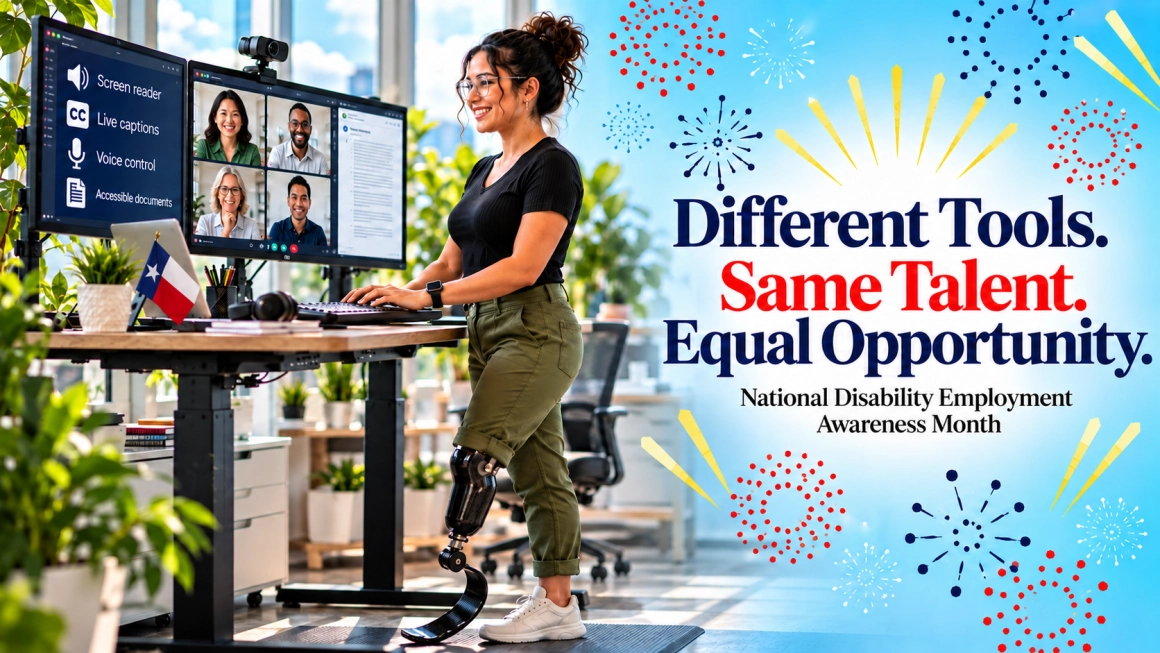
Accessibility is about more than ramps and parking spaces. It's about creating workplaces where people have the tools, opportunities and support to do their best work.
When you hear the words "accessible workplace," what comes to mind?
A wheelchair ramp? An elevator? Designated parking spaces near the front door?
Those are important, of course. But they're only part of the picture.
Think about the last time you joined a virtual meeting with poor audio, struggled to navigate a confusing website or tried to understand instructions that weren't particularly clear.
Now imagine facing those challenges every day just to do your job.
As we recognize National Disability Employment Awareness Month (NDEAM) this October, it's a great opportunity to rethink what accessibility really means in today's workplace.
Because accessibility isn't just about getting through the front door. It's about what happens once you're inside.
Accessibility Has Changed Along With the Workplace
Thirty years ago, conversations about workplace accessibility often focused on physical spaces. Could employees enter the building, reach their workstations and safely navigate their surroundings?
Those questions still matter. But today's workplaces extend far beyond office buildings.
We work through computers, smartphones, virtual meetings, cloud-based platforms and digital communication tools. Some employees work remotely, while others divide their time between multiple locations.
That means accessibility must extend into the digital world, too.
Consider an employee who relies on screen-reading software to navigate a computer. If an employer's scheduling platform or internal website isn't compatible with that technology, a routine task can become an unnecessary obstacle.
Or consider a team member with hearing loss attending a virtual meeting. Accurate captions and accessible meeting materials can make the difference between participating fully and missing important information.
Neither example requires changing the employee's abilities. They require making the tools work for the people using them.
Sometimes the Smallest Changes Make the Biggest Difference
Not every accessibility improvement requires a major investment or a complete workplace redesign.
Sometimes it's as simple as making sure videos have captions, documents are compatible with assistive technology or important instructions are available in more than one format.
Other improvements might include adjustable workstations, accessible software, quieter workspaces or communication practices that make information easier to understand.
And here's something interesting: Many of these improvements can benefit employees who don't have disabilities, too.
Captions help someone following a meeting in a noisy environment. Clear written instructions help new employees learn their responsibilities. Adjustable workstations can improve comfort for people with different physical needs.
When we make workplaces easier to navigate, understand and participate in, more people benefit.
Technology Is Opening New Doors
AI, voice recognition and other emerging technologies are creating new possibilities for workplace accessibility.
Speech-to-text tools can help employees communicate and document information. Screen readers and voice-controlled software can make digital tasks more accessible. Real-time captioning and transcription can help teams communicate more effectively.
These technologies aren't perfect, and employers still need to evaluate whether their tools work for employees with different needs.
But their potential is significant.
The goal isn't to make everyone work the same way. It's to give people effective ways to accomplish the same goals.
As technology continues to reshape the workforce, accessibility should be part of the conversation from the beginning, not something employers address after a problem appears.
An Accessible Workplace Is Also About Culture
Technology and physical spaces are important, but accessibility doesn't stop there.
Consider how an organization conducts job interviews, trains new employees, communicates expectations or provides opportunities for professional growth.
Can applicants request an accessible interview format? Are training materials available to employees who use assistive technology? Do supervisors understand how to respond when an employee needs a workplace adjustment?
And perhaps most importantly, do employees feel comfortable discussing what they need to succeed?
An accessible workplace doesn't assume everyone has identical needs or works in exactly the same way.
It recognizes that people bring different experiences, abilities and approaches to their jobs.
Creating that kind of environment requires thoughtful leadership, clear communication and a willingness to listen.
Accessibility Supports a Stronger Central Texas Workforce
Across Central Texas, employers are navigating changing technologies, evolving skill requirements and the ongoing challenge of finding and retaining talented employees.
Accessibility belongs in that conversation.
Through Workforce Solutions Rural Capital Area (WSRCA) Workforce Centers, our partners at Texas Workforce Solutions-Vocational Rehabilitation (VR) Services help individuals with disabilities prepare for, obtain, maintain and advance in employment. Together, we support employers in creating more accessible workplaces, identifying practical solutions and connecting businesses with qualified talent.
These services reflect an important principle: Employment success isn't simply about matching someone with an available position. It's about helping people build meaningful, sustainable careers while supporting employers in developing strong teams.
And that work continues long after National Disability Employment Awareness Month ends.
The Best Question Isn't Whether Your Workplace Is Accessible
It's whether you're continuing to make it better.
No workplace is perfect, and accessibility isn't a one-time project with a finish line.
It's an ongoing commitment to understanding how people work, identifying unnecessary barriers and finding practical ways to remove them.
As NDEAM comes to a close, we encourage Central Texas employers to look around their workplaces, both physical and digital, and consider where small improvements could make a meaningful difference.
Because a truly accessible workplace isn't one where everyone works the same way. It's one where everyone has a fair opportunity to do their best work.
Discover how our Workforce Centers and Vocational Rehabilitation partners help Central Texas employers create more accessible workplaces and support career opportunities for people of all abilities.