
Your Résumé Has a New Problem: Everyone Else Has AI Too

Posted by: Brian Hernandez
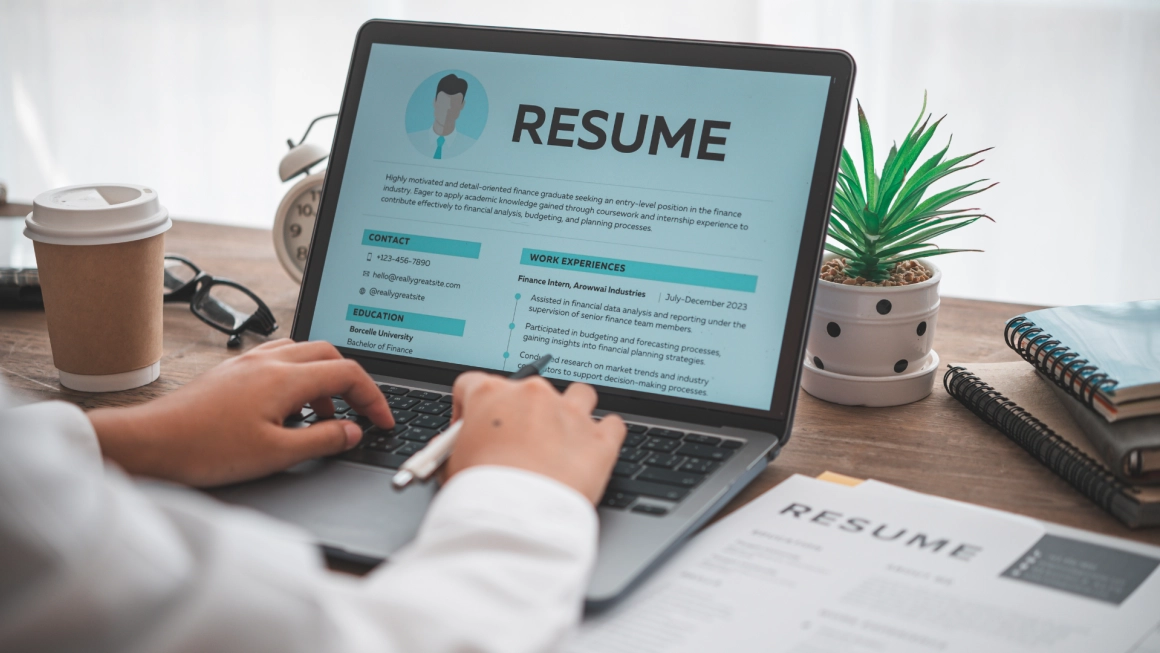
Not long ago, knowing how to use artificial intelligence during a job search could give you an edge. Today, it mostly means you're keeping up.
Job seekers are using AI to strengthen résumés, customize cover letters, research employers, prepare for interviews and identify positions that match their skills. Used well, these tools can save time and help someone present their experience more clearly.
There's just one small problem: everyone else has them too.
As AI becomes a normal part of the job search, employers are receiving more polished applications from more candidates. Résumés are cleaner, cover letters are sharper and keywords can be matched to job descriptions in seconds. At the same time, employers are increasingly using technology to screen and sort those applications.
AI helping your application get past AI. What a time to be alive.
The result is a new challenge for job seekers. Having a polished résumé still matters, but polish alone may not be enough to stand out anymore.
Using AI Isn't the Problem
There's nothing wrong with using AI to help with your job search. If it can help you organize your experience, catch a typo, strengthen a sentence, research an employer or practice for an interview, put it to work.
The problem begins when AI stops helping you tell your story and starts creating the story for you.
A beautifully written résumé isn't particularly useful if it doesn't sound like you. Neither is a cover letter filled with accomplishments or language you wouldn't be comfortable discussing across the table from a hiring manager.
There's also a temptation to copy a job description into an AI tool and ask it to make your résumé a perfect match. That may produce all the right keywords, but eventually there's a good chance you're going to have to talk to an actual human being about those skills.
At least we hope so.
The better approach is to use AI as an editor, researcher and practice partner while keeping your actual experiences at the center of the application.
Polished Isn't the Same as Memorable
For years, much of the advice around résumés has focused on presentation. Use stronger verbs. Clean up the formatting. Customize your summary. Include keywords from the job posting.
All of that still matters, but when nearly anyone can use technology to do those things reasonably well, they become less of a competitive advantage.
What becomes more valuable is proof.
Instead of simply saying you're a strong communicator, explain what you communicated and to whom. Rather than describing yourself as a leader, show what you led. If you're a problem solver, tell the employer about a problem you actually solved and what changed because of it.
That's where your experience becomes your advantage.
An internship, apprenticeship, certification, volunteer project, part-time job or Career and Technical Education program may give you examples another candidate doesn't have. So might helping with a family business, leading a school organization, completing a major project or working a summer job.
AI can help you find the best words to describe those experiences. It can't have those experiences for you.
Make Your Experience Specific
One of the easiest ways to make a résumé more personal and credible is to get specific.
"Helped customers" doesn't tell an employer much. "Assisted an average of 40 customers per shift" begins to show the scale of the work.
"Managed social media" is fine. "Increased social media engagement 35% over six months" tells an employer what happened because you managed it.
The same idea applies whether you work in an office, restaurant, manufacturing facility, hospital, construction site or retail store. Whenever possible, show the size, scope or result of what you did.
You don't need to turn your résumé into an algebra assignment. A few meaningful numbers and specific examples can simply make it easier for an employer to understand what you've accomplished.
AI can help you phrase those accomplishments clearly, but the substance still has to come from you.
Human Connection May Matter Even More
There's an interesting irony in all of this. As technology becomes more involved in hiring, genuine human connection may become more valuable.
When an employer is sorting through hundreds of polished applications, meeting a candidate at a hiring event can make a difference. So can a recommendation from someone who knows your work, a conversation with a recruiter, an internship with an employer or a relationship you've developed within an industry.
Networking doesn't have to mean walking into a room full of strangers and handing out business cards like you're running for mayor. It can be as simple as talking with someone who works in a field you're interested in, asking questions, attending an employer event or staying connected with people you've worked with.
Those relationships don't guarantee a job, but they can help turn you from another document in an applicant tracking system into a person someone remembers.
More Applications Aren't Necessarily Better Applications
AI has also made it much easier to turn a job search into a numbers game. If technology can help you apply for five positions, why not 50?
Because 50 applications for jobs that don't really fit your skills may not get you any closer to employment.
A stronger strategy is to use AI to research opportunities, compare job requirements with your experience and identify positions where there's a genuine match. Then spend more time making those applications count.
Customize the résumé. Research the employer. Understand the position. Be ready to explain why you're interested and what you bring to it.
AI can make a job search faster. That doesn't mean your goal should simply be to make it bigger.
Fine-Tune the Résumé, Don't Lose the Person
One of the hardest things about writing a résumé has always been seeing your own experience the way an employer might see it. AI can help, but sometimes what you really need is another person asking the right questions.
That's where career coaching can make a difference.
Workforce Solutions Rural Capital Area (WSRCA) offers résumé writing workshops and one-on-one career coaching to help job seekers fine-tune their résumés, identify experiences and accomplishments worth highlighting, and make sure the finished product reflects the person behind the application.
A career coach can help you recognize something you may have overlooked, translate experience from one industry to another, identify skills hidden inside previous jobs and determine what an employer really needs to see.
They can also help humanize a résumé that may have been polished a little too enthusiastically by AI.
Think of it this way: AI can suggest the words, but a career coach can help you figure out whether they're the right words for you.
WSRCA teams can also help with interview preparation, job-search strategies and connections to employment opportunities. The goal isn't simply to produce the most technically perfect résumé in the applicant pool. It's to create one that gives an employer a reason to want to meet the person behind it.
Let AI Help You, Not Replace You
AI isn't disappearing from hiring. Job seekers are going to use it, employers are going to use it and the tools are going to keep getting better.
That means simply knowing how to ask AI to improve a résumé isn't much of a competitive advantage anymore. Knowing how to use it thoughtfully may be.
Use it to review your résumé, research an industry, compare your skills with a job description, practice interview questions or help turn a complicated accomplishment into a clear sentence. Then read everything it gives you and ask a simple question: Does this actually sound like me?
The candidates who stand out won't necessarily be the ones with the most perfectly polished applications. They'll be the ones who combine technology with things technology can't easily reproduce: real skills, real experiences, measurable accomplishments, personality and genuine human connections.
So absolutely use AI.
Just don't disappear behind it.
Your résumé doesn't need to sound more like AI. It needs to do a better job of introducing you.