
PATHS for Texas: Expanding Opportunity Across the Rural Capital Area

Posted by: Brian Hernandez
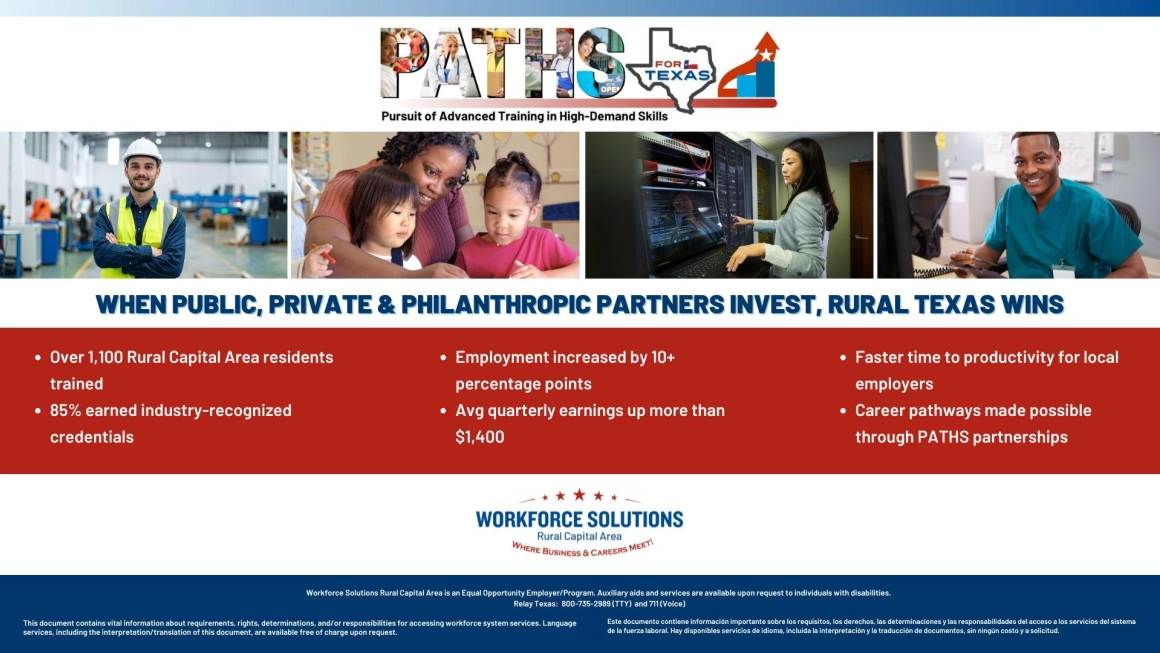
The Rural Capital Area of Central Texas is growing fast. New and expanding industries in manufacturing, healthcare, technology, and skilled occupations are reshaping our regional economy. Keeping pace with that growth requires more than traditional workforce funding alone. It requires flexible partnerships, innovative training models, and investment from public, private, and philanthropic partners working toward a shared goal.
The Pursuit of Advanced Training in High-Demand Skills (PATHS) for Texas program did exactly that. Through PATHS, Workforce Solutions Rural Capital Area (WSRCA) strengthened training pathways that would not have been possible through federal funds alone, creating new opportunities for workers, employers, and communities across our nine-county region.
A Model Built to Go Beyond Federal Limits
Federal workforce funding is critical, but it often comes with narrow eligibility rules and limited flexibility. Many high-need industries such as childcare, hospitality, retail, and emerging apprenticeship pathways fall outside those constraints.
PATHS for Texas filled those gaps. With philanthropic investment led by the Walmart Foundation and strong coordination among workforce boards, PATHS created space for innovation. This blended funding model allowed Workforce Solutions Rural Capital Area to respond directly to employer needs, support underserved populations, and scale training quickly in a changing economy.
Across Texas, PATHS served more than 2,500 participants, with 85% earning at least one industry-recognized credential. The program delivered results at a lower cost per participant than many traditional workforce programs while producing strong employment and earnings outcomes.
How PATHS Strengthened the Rural Capital Area
In the Rural Capital Area, PATHS funding supported four interconnected initiatives designed to meet real regional workforce needs:
Apprenticeship and Pre-Apprenticeship Pathways
PATHS expanded access to registered apprenticeship and pre-apprenticeship programs in manufacturing, construction trades, skilled trades, and healthcare. By partnering with training providers, employers, and local ISDs, WSRCA helped participants move from education into paid, hands-on career pathways.
These investments supported more than 1,100 participants and resulted in hundreds of industry-recognized certifications. For employers, this meant a stronger pipeline of job-ready talent. For workers, it meant access to long-term careers instead of short-term jobs.
Youth Training and Paid Work Experience
Through partnerships such as Ladders for Leaders, PATHS supported youth career exploration, job readiness training, and paid summer employment. Participants earned credentials in resume writing, interviewing, professionalism, and financial literacy while gaining real work experience at competitive wages.
These early connections to the workforce helped young people build confidence, develop transferable skills, and see clear career possibilities within their own communities.
Early Care and Education Workforce Development
One of the most critical gaps addressed by PATHS in the Rural Capital Area was the childcare workforce shortage. PATHS funding supported on-the-job training for new childcare employees and leadership upskilling for existing staff.
As a result, dozens of new childcare workers were hired, and nearly 100 professionals strengthened their leadership skills. For childcare centers, this support stabilized operations and reduced turnover. For families and employers, it helped ensure that reliable childcare remained available, enabling parents to participate fully in the workforce.
Flexible Upskilling for Incumbent Workers
PATHS also supported individualized upskilling for workers already employed but seeking advancement. Flexible, self-paced training allowed participants to earn credentials while balancing work and family responsibilities. Employers benefited from faster onboarding, improved retention, and employees who reached productivity more quickly.
Measurable Impact for Workers and Employers
The outcomes from PATHS demonstrate the power of public-private-philanthropic partnerships:
- Employment for Rural Capital Area participants increased by more than 10 percentage points following training
- Avg quarterly earnings rose by more than $1,400
- Employers reported reduced hiring and training costs and faster time to productivity
- Childcare providers credited PATHS with helping keep their doors open during a time of extreme workforce shortages
An independent evaluation by the Ray Marshall Center at the University of Texas at Austin found that every dollar invested in PATHS returned $2.50 to taxpayers and $3.36 in total societal benefit.
Why Partnerships Matter
PATHS for Texas proves that no single funding source can meet the full range of workforce needs. Federal dollars provide a foundation. Philanthropic investment creates flexibility. Employer partnerships ensure training aligns with real jobs.
Together, these partnerships allowed Workforce Solutions Rural Capital Area to:
- Serve workers who did not qualify for traditional programs
- Support industries critical to local economies but often overlooked
- Adapt training quickly as employer needs changed
- Build sustainable career pathways instead of short-term solutions
Looking Ahead
The success of PATHS offers a clear roadmap for the future of workforce development in the Rural Capital Area. Flexible funding, strong employer engagement, and cross-sector collaboration are essential to building a workforce that is resilient, inclusive, and ready for what comes next.
By continuing to invest in partnerships that go beyond what federal funding can do alone, Workforce Solutions Rural Capital Area can keep expanding opportunity, strengthening local businesses, and helping residents build careers that support long-term economic growth.
Explore the PATHS For Texas White Paper
Review the PATHS For Texas Report
Watch the Impact Video: