
The Skills Gap Isn’t Always About Skills

Posted by: Brian Hernandez
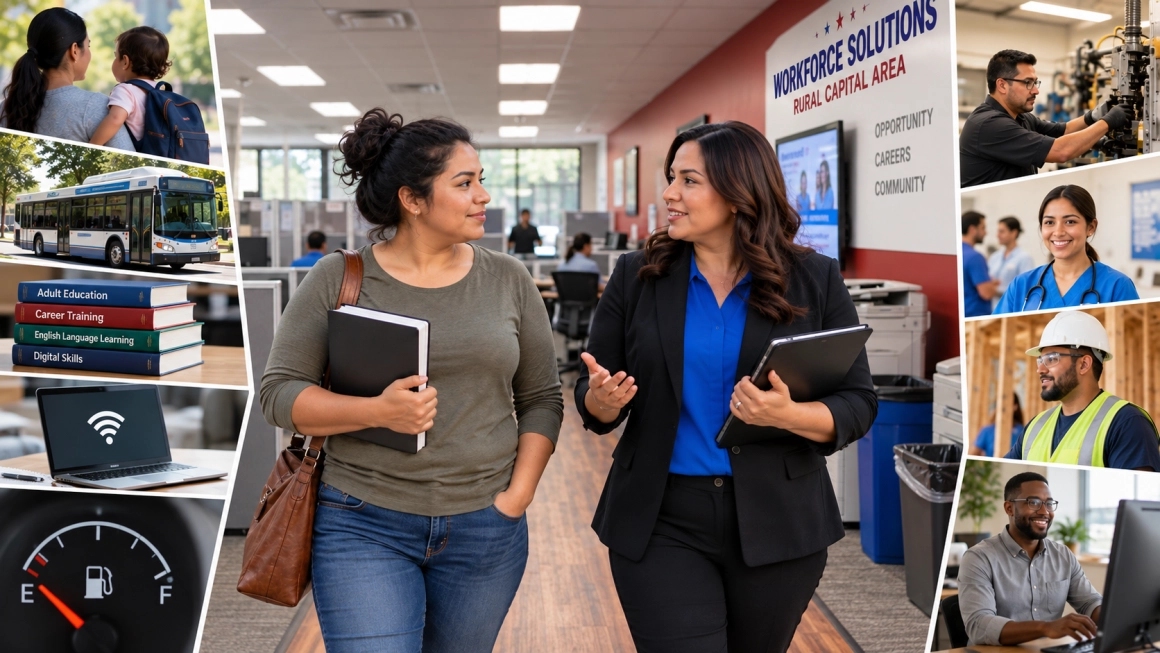
When we talk about workforce challenges, we often talk about the “skills gap.”
Employers need skilled workers. Job seekers need the right training. Communities need strong education and career pathways to keep their economies growing.
But sometimes, the biggest barrier between a person and a better career isn’t skills at all.
It might be child care.
Transportation.
The cost of books, tools, uniforms or other training supplies.
It could be not having a high school diploma, needing to strengthen English-language skills or simply not knowing which training program will actually lead to a good career.
That’s an important conversation this week as we recognize Adult Education and Family Literacy Week, September 13–19, and continue celebrating Workforce Development Month throughout September.
Building Skills Starts With Removing Barriers
Adult education can open doors.
For someone who didn’t finish high school, earning a high school equivalency credential can be the first step toward additional education or training. For someone learning English, stronger language skills can create new opportunities at work. For another person, improving math, reading or digital skills may provide the confidence and foundation needed to pursue an entirely new career.
But completing that next step isn’t always as simple as signing up for a class.
Life gets in the way.
A parent may want to enroll in training but need reliable child care. Someone living in a rural community may have transportation challenges. A worker may need to balance training with a full-time job. Another person may be ready to make a career change but have no idea which credential employers are actually looking for.
That’s why workforce development has to be about more than skills.
It has to be about people.
Start With the Person, Not the Program
At Workforce Solutions Rural Capital Area (WSRCA), our job isn’t to push someone toward a particular program. It’s to start by understanding where they are, where they want to go and what may be standing in the way.
Then we can help explore solutions.
That might mean connecting someone with education or occupational training. It could mean helping identify available support services or introducing them to one of the many community partners working throughout our nine-county region.
Sometimes the most valuable thing we can provide is simply a starting point.
Because workforce development works best when people don’t have to navigate every challenge alone.
Employers Face Barriers, Too
The same idea applies to businesses.
When an employer says they can’t find qualified workers, the answer isn’t always simply “train more people.”
We need to ask why.
Are enough people entering the occupation? Are education and training programs aligned with what employers actually need? Are students aware these careers exist? Are there barriers keeping qualified people from entering or staying in the workforce? Are employers struggling with recruitment, retention or changing skill requirements?
Those questions are why WSRCA is employer-led.
We work with businesses and industry partners to understand their workforce needs today while also looking ahead to what they’ll need tomorrow. Then we bring together education, economic development, community organizations and other partners to help build solutions.
Skills Matter. So Does Everything Around Them.
Adult Education and Family Literacy Week is a reminder that learning can happen at any stage of life.
It’s also a reminder that behind every workforce statistic is a person.
A parent trying to create more stability for their family.
A worker preparing for a changing industry.
A young adult looking for direction.
An employer trying to grow.
And sometimes closing the skills gap begins long before someone enters a classroom.
It begins by listening, identifying the real barrier and connecting people with the right resources to move forward.
That’s workforce development.
And that’s why, when you’re not sure what your next step should be, one of the best places to start is simply with a conversation.
Connect with Workforce Solutions Rural Capital Area to explore education, training, career and workforce resources available throughout our nine-county region.